Near zero, far zero, and what a 10-meter error in the zero range really costs.
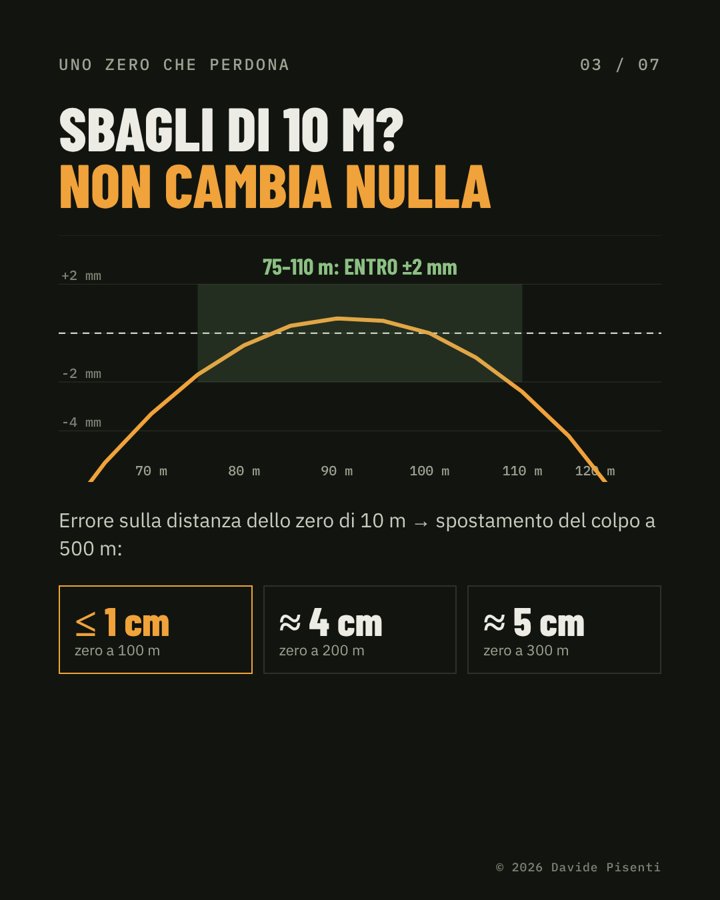
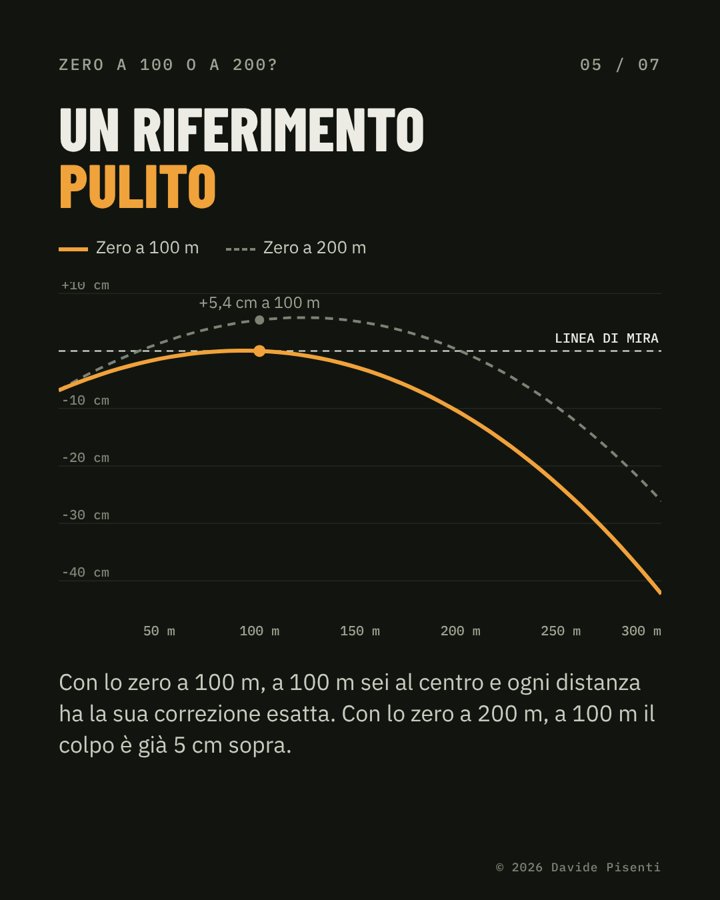
From 75 to 110 meters the shot stays within 2 mm of the line of sight.
A 10-meter error in the zero is worth less than 1 cm at 500 meters.
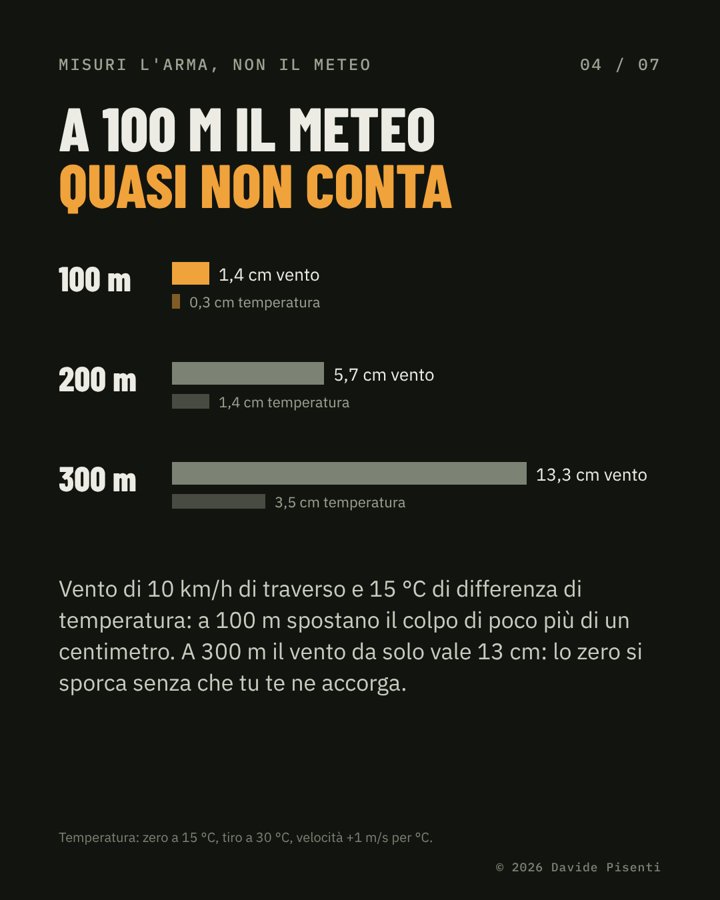
At 100 meters, wind and temperature move the shot by only a few millimeters.
"Zero at 100 meters" is one of the first things you learn. Almost nobody explains why 100, and not 200 or 300. The answer lies in three numbers.
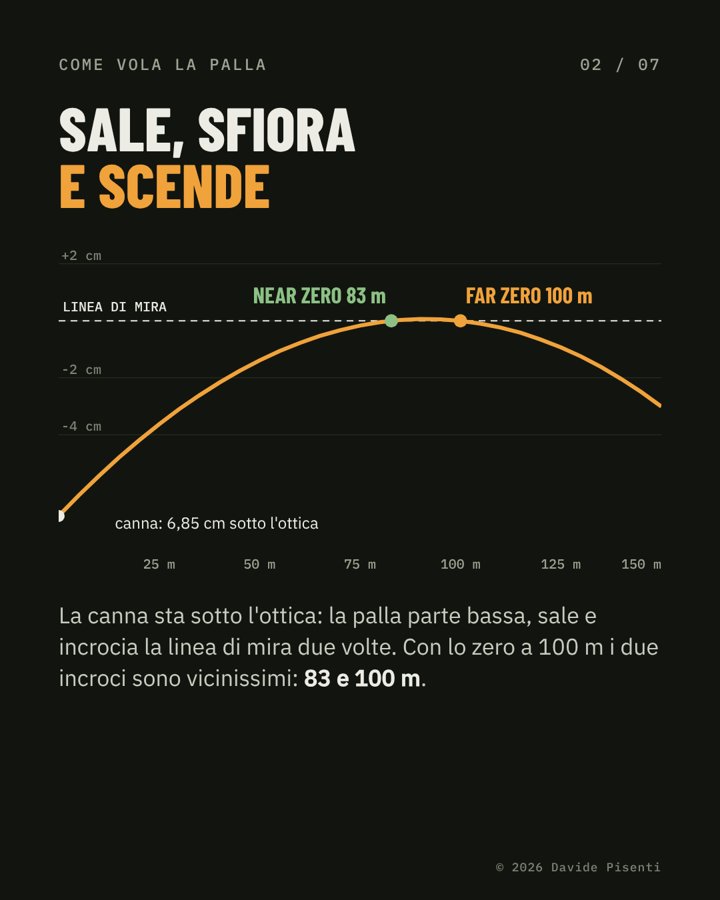
The bullet starts below the line of sight (the scope sits above the barrel), rises, crosses it a first time, and crosses it again at the zero range. With a 100-meter zero the two crossings are close together, and over a good stretch the shot stays practically on the line of sight.
| With a 100 m zero | Value |
|---|---|
| First crossing (near zero) | 83 m |
| Second crossing (far zero) | 100 m |
| Span in which the shot stays within 2 mm of the line of sight | 75 to 110 m |
.308, 175-grain bullet, 807 m/s, sight 6.85 cm above the bore, standard atmosphere.
In practice: if the "100 meters" at your range is really 95 or 105, your zero does not change by any measurable amount.
Nobody measures the zero range to the centimeter. Here is what a 10-meter error in the zero range costs, looking at the shot at 500 meters:
| Zero range | Effect at 500 m of a 10 m error |
|---|---|
| 100 m | less than 1 cm |
| 200 m | about 4 cm |
| 300 m | about 5 cm |
The farther you zero, the more a small range error carries over into an error at every shooting distance.
A zero must be done in "clean" conditions: the group should tell you where the rifle shoots, not what the wind did. The shorter the distance, the less the environment contaminates the result.
| Range | 10 km/h wind from 3 o'clock |
|---|---|
| 100 m | 1.4 cm |
| 200 m | 5.7 cm |
| 300 m | 13.3 cm |
| Range | From 15 to 30 °C (velocity +1 m/s per °C) |
|---|---|
| 100 m | 0.3 cm |
| 200 m | 1.4 cm |
| 300 m | 3.5 cm |
At 300 meters a light breeze moves the shot by more than 13 centimeters: zeroing there means building that day's wind into your zero.
Once you are zeroed at 100 meters, everything else is calculation: elevation and windage for every range, near zero and far zero, the effect of wind and temperature. Every number in this article takes a few seconds to get in the app, in the interactive chart and in the Firing table, with your rifle and your ammunition.